Introduction
Across sub-Saharan Africa, millions of women navigate a healthcare landscape riddled with
barriers; economic, geographic, cultural, and structural. For Top Value Health Consult (TVHC),
the principle of equity is not a background aspiration; it is a driving force that shapes how
health programmes are designed, delivered, and evaluated. TVHC, see equity as ensuring that
every individual regardless of gender, income, location, or social status has a fair and just
opportunity to achieve their full health potential. When that opportunity is systematically
denied to women, the consequences ripple across entire communities and generations.
This article examines the persistent inequities facing women in accessing healthcare in Nigeria
and the broader African region, and how TVHC’s equity-centred approach offers a practical,
evidence-informed path toward closing those gaps.
Problem Context
Women bear a disproportionate burden of poor health outcomes in low- and middle-income
countries, yet remain chronically underserved by health systems. In Nigeria, data consistently
reveals stark disparities in healthcare access between urban and rural populations, and
between men and women. A 2025 analysis published by TVHC examining women’s health
access in Enugu and Kano States found that economic constraints, limited education, and deep-
rooted cultural norms significantly restrict women’s ability to seek and receive quality care even
when services exist.
Several compounding challenges define this crisis. Financial barriers remain formidable; many
women cannot afford out-of-pocket costs for consultations, medications, or transportation to
health facilities. Geographic isolation places entire communities far from functional health
infrastructure. Social and cultural norms in certain settings require women to obtain spousal or
family permission before accessing care, creating delays that are often life-threatening in
maternal or emergency contexts. Additionally, many health facilities lack gender-sensitive
services or female health workers, deterring women from seeking help altogether.
These are not isolated problems. They reflect systemic failures in how health systems have
historically been designed often without adequate input from the women they are meant to
serve. The consequences include preventable maternal deaths, untreated chronic illness,
missed immunizations for children, and communities unable to fully recover from disease
burdens like malaria and neglected tropical diseases (NTDs).
TVHC’s Perspective and Approach
Top Value Health Consult operates on the conviction that equity is both a moral imperative and
a strategic necessity for sustainable health systems. TVHC’s equity pillar focuses on designing
inclusive health solutions that target marginalized populations with a particular emphasis on
gender equality and accessible healthcare in underserved communities.
In practice, TVHC integrates equity considerations at every stage of programme design. This
begins with formative research that captures the lived realities of women at the community
level understanding not just what services are unavailable, but why women do and do not use
the services that exist. Behavioral economics and community-level engagement help surface
the social and structural determinants that standard health data often misses.
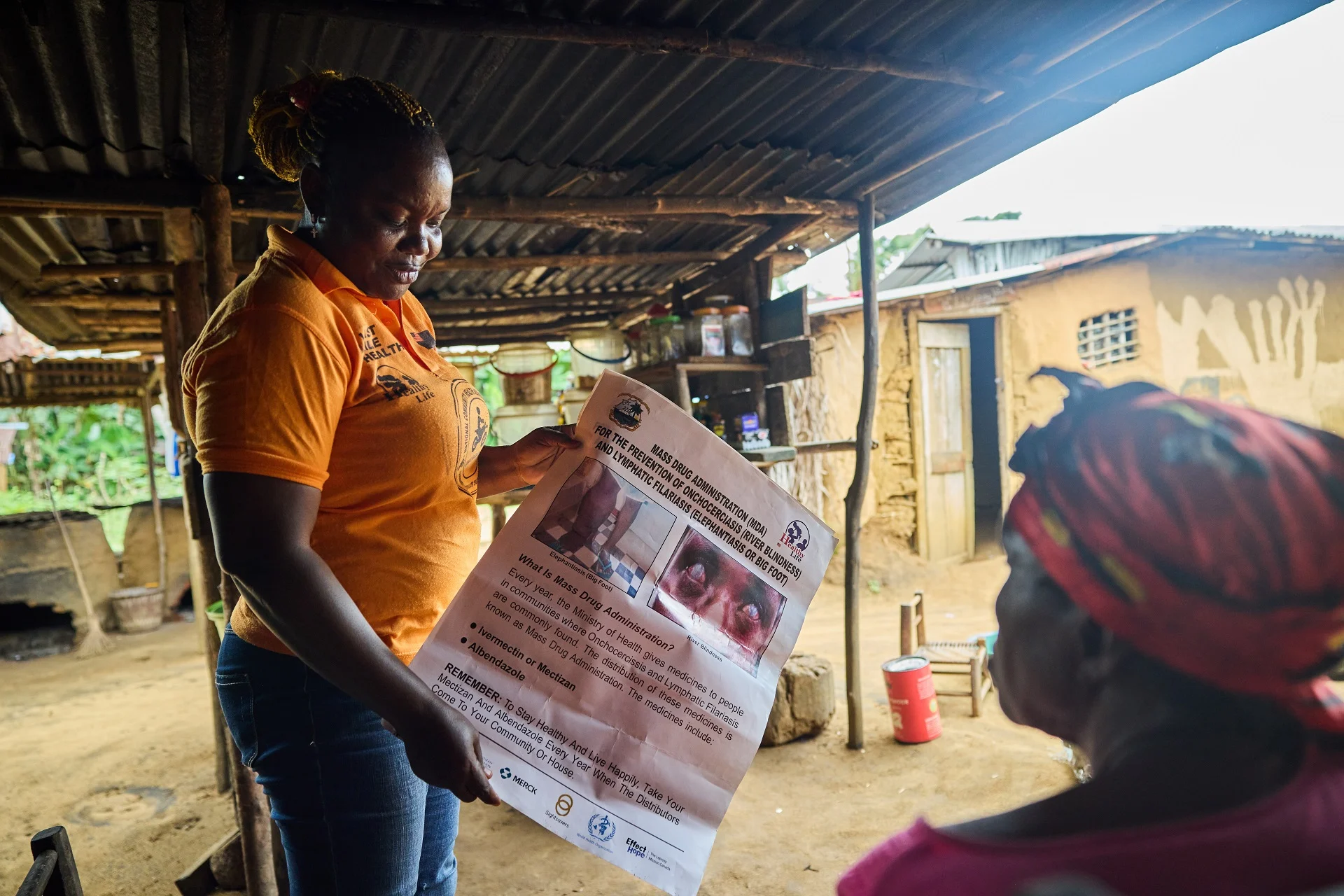
TVHC’s work in malaria and NTD programming illustrates this equity lens in action. When
designing mass drug administration (MDA) coverage surveys or case management strategies,
TVHC pays deliberate attention to reach ensuring that women, girls, and other marginalized
groups are not simply counted in aggregate figures but are specifically tracked for access and
outcomes. In communities where women have lower literacy or limited mobility, programme
adaptations are made to ensure their inclusion rather than their exclusion by default.
TVHC also prioritizes gender-responsive capacity building. Training community health workers
to understand and address the specific barriers women face including recognising signs of
domestic constraints on care-seeking helps embed equity into frontline service delivery.
Leadership development within local health structures is designed to include and elevate
women, recognising that female representation in health governance is closely linked to more
equitable health outcomes for communities.
Collaboration with local governments, civil society organisations, and women’s groups further
strengthens this approach. No single actor can dismantle structural inequity alone, and TVHC
actively facilitates the multi-sectoral partnerships necessary to address the economic,
educational, and social determinants of women’s health.
Impact and Key Lessons
The evidence from equity-focused programming in Africa is clear: when health systems are
deliberately redesigned to reach women, outcomes improve not only for women, but for entire
households and communities. Programmes that integrate gender analysis consistently
demonstrate higher coverage rates, greater community trust, and more sustainable health
behaviours over time.
Several lessons emerge from TVHC’s experience and from the broader public health literature.
First, equity cannot be assumed, it must be measured. Disaggregating data by sex, location, and
socioeconomic status is essential to identifying who is being left behind and why. Second,
community voices particularly those of women themselves must be central to programme
design, not an afterthought. Solutions imposed without local ownership rarely hold. Third,
addressing equity requires patience and long-term investment. Short-term interventions rarely
shift the structural conditions that produce inequity; sustained engagement with communities,
governments, and partners is what drives lasting change.
Perhaps most critically, equity-focused work must avoid the trap of treating women purely as
beneficiaries. Women are also powerful agents of health change as caregivers, community
leaders, health workers, and advocates. Programs that recognize and strengthen this agency
are consistently more effective and more sustainable.
Conclusion and Call to Action
Health equity for women is an achievable goal, provided that health systems, organizations,
and governments commit to the sustained, deliberate effort it demands. Top Value Health
Consult calls on all stakeholders in public health programme implementers, policymakers,
donors, and community leaders to place gender equity at the center of health systems
strengthening efforts across Africa.
This means investing in gender-disaggregated data collection, supporting community-driven
approaches that reflect women’s realities, and holding health systems accountable when they
fall short of equitable service delivery. It means listening to women not about them.
TVHC remains committed to driving this agenda forward, one community, one programme, and
one evidence-based decision at a time. Because a world with better health systems is, by
definition, a world that leaves no woman behind.